

In recent years, matcha tea has become one of the most popular healthy drinks around the world. From coffee shops to social media trends, many people are now choosing matcha as part of their daily lifestyle. Interestingly, discussions about modern lifestyle trends online can range from healthy beverages to entertainment topics such as judi slot online, showing how diverse internet culture has become today. However, among all these trends, matcha tea continues to stand out because of its unique flavor, health benefits, and rich history.
But what exactly is matcha tea, and how is it different from regular green tea? Many people think they are the same because both come from the same plant. While that is partially true, there are several important differences between matcha and traditional green tea that make each drink unique.
What Is Matcha Tea?
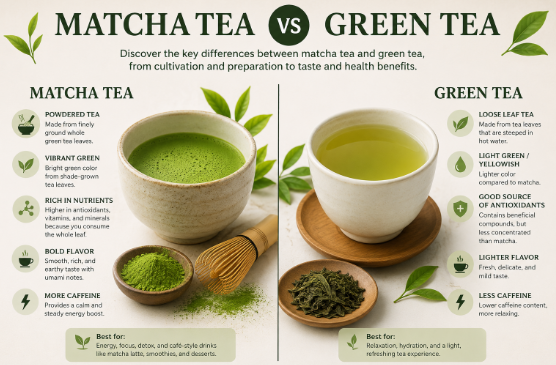
Matcha is a type of powdered green tea that originally comes from Japan. Unlike regular green tea leaves that are steeped in hot water and removed before drinking, matcha uses the entire tea leaf in powdered form. This means you consume the whole leaf, which gives matcha a stronger flavor and a higher concentration of nutrients.
The process of making matcha is also very special. Before harvesting, tea plants used for matcha are covered from sunlight for about three weeks. This shading process increases chlorophyll levels, giving matcha its bright green color and rich taste. After harvesting, the leaves are carefully dried and ground into a very fine powder using stone mills.
Traditionally, matcha has been used in Japanese tea ceremonies for centuries. Today, it is enjoyed worldwide in many forms, including matcha latte, smoothies, desserts, and even ice cream.
What Is Green Tea?
Green tea is one of the oldest and most commonly consumed teas in the world. It is made from the leaves of the Camellia sinensis plant, the same plant used for matcha. However, green tea is processed differently.
For regular green tea, the leaves are harvested, dried, and steeped in hot water before being discarded. The drink itself is lighter in color and flavor compared to matcha. Green tea is widely known for its refreshing taste and health benefits, making it a favorite beverage for many people.
There are many types of green tea available, including sencha, jasmine green tea, and dragon well tea. Each variety has its own flavor profile depending on how the leaves are grown and processed.
The Main Difference Between Matcha and Green Tea
Although matcha and green tea come from the same plant, there are several major differences between them.
1. Preparation Method
The biggest difference lies in how they are prepared. Matcha is mixed directly into water or milk because it comes in powder form. Green tea, on the other hand, is steeped and filtered before drinking.
With matcha, you consume the whole tea leaf, while with green tea, you only drink the infused water.
2. Nutritional Content
Because matcha uses the entire leaf, it contains more antioxidants, vitamins, and minerals than regular green tea. Matcha is especially rich in catechins, a type of antioxidant known for supporting overall health.
Many health enthusiasts prefer matcha because it delivers a stronger nutritional boost in a smaller serving.
3. Caffeine Levels
Matcha generally contains more caffeine than green tea. A cup of matcha can provide a steady energy boost without the sudden crash often associated with coffee.
Green tea contains less caffeine, making it a good option for people who want a lighter and more relaxing drink.
4. Taste and Texture
Matcha has a creamy texture with a rich, slightly earthy flavor. Some people describe it as having an umami taste. Its bold flavor can take time to get used to, especially for beginners.
Green tea usually tastes lighter, fresher, and more delicate. It is often easier for new tea drinkers to enjoy.
5. Appearance
One of the easiest ways to tell them apart is by appearance. Matcha has a vibrant green color because of its high chlorophyll content, while regular green tea tends to have a pale yellow or light green color after brewing.
Health Benefits of Matcha Tea
Matcha tea is popular not only because of its taste but also because of its potential health benefits.
Rich in Antioxidants
Matcha contains high levels of antioxidants that may help protect the body from free radicals and oxidative stress.
Supports Focus and Calmness
Matcha contains an amino acid called L-theanine, which may help improve concentration while promoting relaxation at the same time.
Boosts Energy Naturally
Many people drink matcha as a healthier alternative to coffee because it provides more stable energy throughout the day.
May Support Metabolism
Some studies suggest that green tea compounds, including those found in matcha, may help support metabolism when combined with a healthy lifestyle.
Which One Is Better?
There is no single answer to this question because it depends on personal preference and lifestyle needs.
If you want a stronger flavor, higher antioxidant content, and more caffeine, matcha may be the better option. It is also ideal for people who enjoy modern café-style drinks such as matcha latte.
However, if you prefer a lighter and more traditional tea experience, green tea can still provide excellent health benefits with a milder taste.
Both drinks can be part of a healthy daily routine when consumed in moderation.
Final Thoughts
Matcha tea and green tea may come from the same plant, but they offer very different experiences. Matcha stands out because of its unique production process, concentrated nutrients, bold flavor, and vibrant appearance. Meanwhile, green tea remains a timeless beverage loved for its refreshing and gentle taste.
As matcha continues to grow in popularity around the world, more people are discovering the differences between these two healthy drinks. Whether you choose matcha or green tea, both can be enjoyable additions to a balanced lifestyle.